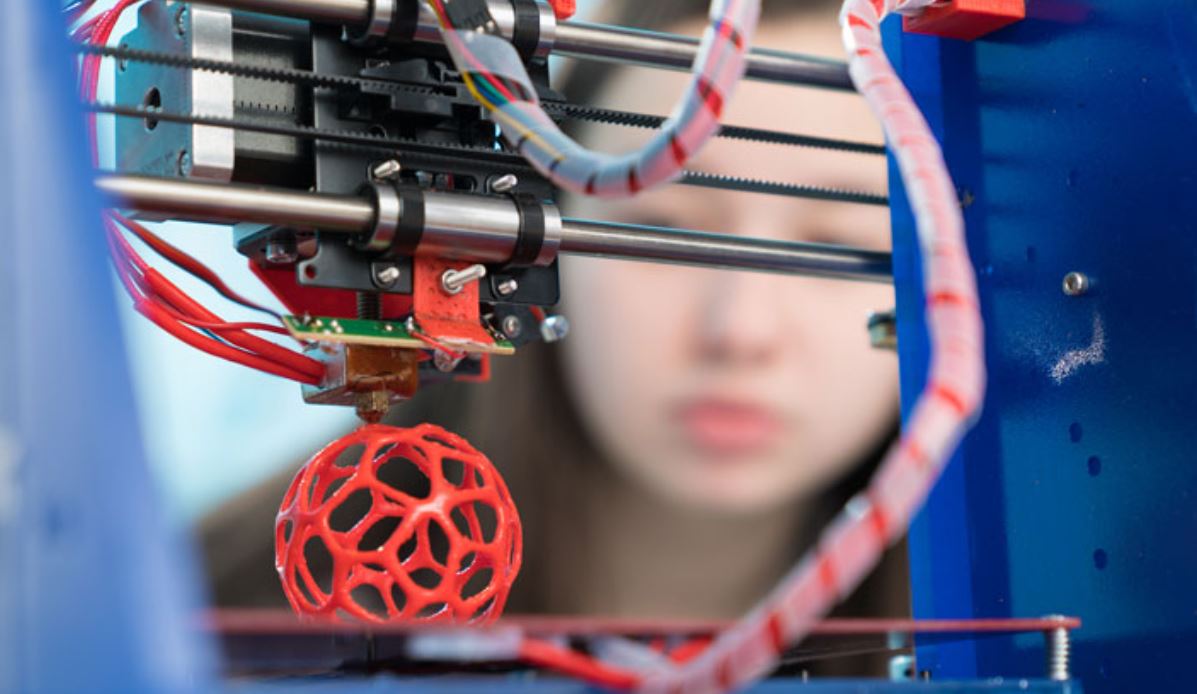
Exploring the Intersection of 3D Printing and CNC Technology

In the ever-evolving landscape of manufacturing, the convergence of cutting-edge technologies has paved the way for unprecedented innovation. Among these transformative technologies, 3D printing and Computer Numerical Control (CNC) machining stand out as revolutionary tools reshaping the way products are designed, prototyped, and manufactured. This article delves into the synergy between 3D printing and CNC technology, exploring how their integration is revolutionizing manufacturing processes across industries.

Exploring The Intersection of CNC Machining and 3D Printing
3D Printing and CNC Technology


Understanding 3D Printing and CNC:

Before delving into their synergy, it's essential to grasp the fundamentals of 3D printing and CNC technology:

3D Printing:Also known as additive manufacturing, 3D printing builds three-dimensional objects layer by layer from digital designs. This additive process enables unparalleled design flexibility, allowing for the creation of complex geometries and intricate structures with precision and efficiency.

CNC Machining:Conversely, CNC machining is a subtractive manufacturing process that utilizes computer-controlled machines to remove material from a solid block, resulting in the creation of precise and detailed components. CNC machines, equipped with cutting tools, follow pre-programmed instructions to carve out parts from various materials such as metal, plastic, and wood.

The Synergy Unleashed:

While 3D printing and CNC machining have traditionally been viewed as distinct manufacturing methods, their integration offers a potent combination of strengths:

1. Hybrid Manufacturing:The fusion of 3D printing and CNC technology enables hybrid manufacturing processes that leverage the benefits of both additive and subtractive techniques. For example, a part may be initially 3D printed to create complex features, then subjected to CNC machining for surface finishing and dimensional accuracy.

2. Enhanced Precision:By combining the high precision of CNC machining with the intricate detailing of 3D printing, manufacturers can achieve unparalleled levels of accuracy and surface finish. This synergy is particularly advantageous in industries such as aerospace, automotive, and medical, where precision is paramount.

3. Material Versatility: 3D printing and CNC machining support a wide range of materials, including metals, plastics, ceramics, and composites. By integrating these technologies, manufacturers gain access to a diverse palette of materials, each offering unique properties suited to specific applications.

4. Streamlined Production: The integration of 3D printing and CNC technology streamlines the production process, reducing lead times and minimizing material waste. Manufacturers can optimize workflow by leveraging the strengths of each technology, from rapid prototyping with 3D printing to high-volume production with CNC machining.

Applications Across Industries:

The synergy between 3D printing and CNC technology finds applications across diverse industries:

1. Automotive Manufacturing: In the automotive sector, hybrid manufacturing processes are used to produce lightweight components with complex geometries, improving fuel efficiency and performance.

2. Medical Device Production:The integration of 3D printing and CNC machining enables the fabrication of patient-specific medical implants and surgical instruments, enhancing precision and customization.

3. Tooling and Prototyping: Manufacturers utilize hybrid manufacturing for the rapid production of tooling and prototypes, accelerating product development cycles and reducing time-to-market.

4. Customized Production:From consumer electronics to jewelry, the synergy between 3D printing and CNC machining enables the creation of bespoke, personalized products tailored to individual preferences.

The Future of Manufacturing:

As the capabilities of 3D printing and CNC technology continue to evolve, the synergy between these technologies will play an increasingly pivotal role in shaping the future of manufacturing. From on-demand production to sustainable manufacturing practices, the integration of 3D printing and CNC machining holds immense potential to drive innovation, efficiency, and customization across industries.

In conclusion, the convergence of 3D printing and CNC technology represents a paradigm shift in the manufacturing landscape, unlocking new possibilities for design, production, and customization. By harnessing the synergies between these transformative technologies, manufacturers can embark on a journey of innovation, pushing the boundaries of what's possible and ushering in a new era of manufacturing excellence.

 Revolutionizing Manufacturing: The Rise of 3D Printer Prototypes

In the realm of manufacturing, innovation is the driving force that propels industries forward. Among the myriad technological advancements, 3D printing has emerged as a transformative tool, offering unprecedented opportunities for rapid prototyping and customization. Within the realm of 3D printing, the development of prototypes holds particular significance, serving as a crucial stage in product design and iteration. This article delves into the world of 3D printer prototypes, exploring their impact on manufacturing processes and the broader implications for various sectors.

MakerBot 3D Printer for Rapid Prototyping


The Evolution of Prototyping:

Traditionally, the process of prototyping involved intricate and time-consuming methods, often requiring skilled craftsmen to painstakingly create models by hand. This approach was not only labor-intensive but also limited in terms of design complexity and iteration speed. However, with the advent of 3D printing technology, prototyping underwent a revolutionary transformation.

Enter 3D Printing:

3D printing, also known as additive manufacturing, enables the creation of three-dimensional objects layer by layer from digital designs. This additive process allows for unprecedented design freedom and intricate detailing, surpassing the constraints of traditional manufacturing techniques. Moreover, 3D printing facilitates rapid iteration, allowing designers to quickly modify and refine prototypes based on feedback and testing.

The Role of Prototypes:

Prototypes play a pivotal role in the product development lifecycle, serving as tangible representations of conceptual designs. They enable designers and engineers to assess functionality, ergonomics, and aesthetics before committing to mass production. By utilizing 3D printer prototypes, companies can accelerate this iterative process, reducing time-to-market and minimizing development costs.

Advantages of 3D Printer Prototypes:

The adoption of 3D printer prototypes offers numerous advantages across various industries:

1. Speed and Efficiency: Traditional prototyping methods often entail lengthy lead times. In contrast, 3D printing enables rapid prototyping, allowing for quick iterations and accelerated product development cycles.

2. Cost-Effectiveness: With 3D printing, companies can produce prototypes on-demand, eliminating the need for costly tooling and specialized machinery. This cost-effective approach makes prototyping accessible to startups and small businesses.

3. Customization and Complexity:3D printing empowers designers to create highly customized and complex geometries that would be challenging or impossible to achieve through traditional manufacturing methods. This capability fosters innovation and enables the realization of novel designs.

4. Iterative Design: The iterative nature of 3D printing facilitates continuous improvement and optimization. Designers can easily modify prototypes based on real-world testing and user feedback, leading to enhanced product performance and user satisfaction.

Applications Across Industries:

The versatility of 3D printer prototypes transcends industry boundaries, finding applications in:

1. Product Design and Development: From consumer electronics to automotive components, 3D printer prototypes enable designers to iterate quickly and efficiently, refining product concepts and enhancing functionality.

2. Medical Innovations: In the field of healthcare, 3D printer prototypes are revolutionizing the development of medical devices, prosthetics, and anatomical models. These prototypes enable personalized healthcare solutions tailored to individual patient needs.

3. Aerospace and Defense: Aerospace manufacturers leverage 3D printer prototypes to accelerate the development of lightweight and high-performance components, thereby reducing aircraft weight and fuel consumption.

4. Architectural Modeling:Architects and urban planners utilize 3D printer prototypes to create detailed scale models of buildings and cityscapes, facilitating visualization and design validation.

As 3D printing technology continues to advance, the capabilities of 3D printer prototypes will further expand. From the integration of advanced materials to the development of multi-functional prototypes, the future holds boundless possibilities. Moreover, as 3D printing becomes more accessible and cost-effective, its democratization will fuel innovation across industries, driving the next wave of technological disruption. 

In conclusion, 3D printer prototypes represent a paradigm shift in the realm of manufacturing, offering unparalleled advantages in speed, customization, and innovation. By embracing this transformative technology, companies can unleash creativity, streamline production processes, and ultimately redefine the boundaries of what's possible. As we stand on the cusp of a new era of manufacturing, the journey of exploration and innovation with 3D printer prototypes is just beginning.

 Selecting The Right Rapid Prototyping Process

Choosing the right rapid prototyping process is essential to develop a product successfully. Moreover, rapid prototyping processes offer varying benefits and constraints. Hence, the choice of the right approach depends on certain factors, including:

Rapid Prototyping for Metalwork
One of the most resource efficient methods for rapid prototyping is 3D printing


Complexity of the Prototype

Examining the complexity of the prototype design is a crucial consideration in choosing the right prototyping process. Some rapid prototyping processes, like SLA and SLS, are perfect for handling intricate geometries, while others are best suited for handling simpler designs or features. Similarly, pick a process that accurately imitates your prototype’s design details.

Material Requirements

Identifying the required material for the final product is crucial to choosing a prototyping process compatible with such materials. SLA has a broad range of material compatibility, followed by SLS and CNC machining. Hence, you should ensure the compatibility of the chosen material with the required properties of the prototype since some processes are limited to certain materials.

Prototyping Speed

Prototyping processes exhibit varying speeds, some offering faster lead times than others. It would help to evaluate the speed at which the prototypes are to be ready to choose the right process. Examine the project timelines to determine the appropriate rapid prototyping process that fits your schedule.

Available Equipment and Expertise

Consider the required expertise and availability of the equipment in your establishment or from manufacturing partners during prototype process selection. Ensure you pick a prototyping process that matches your organization’s expertise and resources to ensure optimal implementation.

Post-Processing Requirements

Identify any additional processing procedures that the prototypes may require. Some rapid prototyping processes may need secondary processes like curing, painting, or polishing to get the preferred results.  Also, it would be best to consider the required time and resources for the post-processing steps.

Rapid Prototyping 

Rapid prototyping is the process of quickly building a 3D object to visually, and functionally, evaluate a design.  There are several popular methods to choose from to rapidly prototype an object including vacuum casting, CNC machining and 3D printing to name a few. There are two categories within rapid prototyping: 

Low-fidelity prototypes: this is when the prototype has noticeable differentiations to the proposed final product.  

High-fidelity prototypes: this is when the prototype matches the proposed final product. 

THE DIFFERENCE BETWEEN RAPID PROTOTYPING AND 3D PRINTING


Applications: 

Rapid prototyping processes are largely used by product designers and engineers. This is because it enables them to physically view how their product will appear or work in the early stages of design.  

Having a physical model is also beneficial for clients who are working with designers, as it allows them to comprehend each aspect of the product in context. As a result, clients are generally able to provide designers with more accurate feedback because they can see and touch it. This gives room for alterations and improvements to be made in the early stages.  

 Jumping the gun straight into mass manufacturing is asking for a headache, especially due to the fact that fixing errors or making alterations at this late stage takes a lot of time and money. Rapid prototyping offers fantastic precision and is used to create accurate model geometries. It is an affordable way to test your product and we encourage everyone to make use of it! 

3D Printing 

3D printing is a type of additive manufacturing process. Additive manufacturing describes the technology that is used to build 3D objects. As its name implies, it involves adding material layer-upon-layer to create an object.  

 By contrast, traditional manufacturing processes are subtractive – such as carving, milling, and machining. In additive manufacturing, computer-aided-design (CAD) directs data to hardware that can physically add material in layers to form precise geometries. 3D printing is one of several types of additive manufacturing processes.  

 Applications: 

It is becoming more prominent for 3D printing to be used in manufacturing as an additive process. There are a growing number of companies employing this on a large scale. You might be wondering – why use 3D printers for this? Well, 3D printers offer the opportunity to create complex parts that would otherwise be too difficult or expensive to manufacture using traditional dies, moulds, milling, or machining. With intricate features and complex part geometries becoming feasible to manufacture, really the sky is the limit for 3D printing.  

Other advantages include a reduction in assembly pieces. In contrast to traditional methods of joining multiple pieces together, you can now 3D print all of your pieces as a single part, which can increase strength and durability. 3D printing can make a part weight lighter and reduce waste drastically. In fact, it can reduce waste by up to 90% compared to using traditional subtractive manufacturing methods.   

 Aerospace Companies 

Key applications include environmental control systems (ECS) ducting, custom cosmetic aircraft interior components, rocket engines components, combustor liners, tooling for composites, oil and fuel tanks and UAV components. 

 Medical Industry 

Key applications include true-to-life anatomical models, orthopaedic implant devices, dental devices, pre-surgery models from CT scans, custom saw and drill guides, enclosures, and specialized instrumentation. 

 Revolutionizing Innovation: The Role of 3D Printing in CNC Prototyping

In the realm of manufacturing and product development, precision and efficiency are paramount. Traditional methods of prototyping often involve lengthy processes, high costs, and limited design flexibility. However, the emergence of 3D printing, coupled with Computer Numerical Control (CNC) technology, has transformed the landscape of prototyping, offering unparalleled advantages to designers, engineers, and manufacturers alike.

The Fusion of Technologies

Combining the capabilities of 3D printing with CNC machining has resulted in a powerful synergy that addresses many limitations of conventional prototyping methods. 3D printing, also known as additive manufacturing, allows for the creation of complex geometries with ease and precision. Meanwhile, CNC machining offers high-speed, high-accuracy subtractive manufacturing capabilities. By integrating these technologies, the strengths of each complement the other, resulting in faster prototyping cycles and enhanced design possibilities.

3D Printing Prototyping


Unmatched Precision and Detail

One of the most significant advantages of utilizing 3D printing in CNC prototyping is the level of precision and detail it offers. Traditional machining methods may struggle with intricate designs or complex geometries, often requiring multiple iterations and adjustments. 3D printing, on the other hand, excels at producing intricate structures with micron-level accuracy. This precision ensures that prototypes closely resemble the final product, facilitating more accurate testing and evaluation.

Rapid Iteration and Design Optimization

Speed is another critical factor in product development cycles. With 3D printing and CNC prototyping, iterations that once took weeks can now be accomplished in a matter of days or even hours. This rapid turnaround allows designers to quickly test and refine their concepts, accelerating the overall development process. Furthermore, the digital nature of these technologies enables easy modification of designs, facilitating on-the-fly adjustments and optimization based on real-world testing feedback.

Rapid Prototyping and 3D printing are often mistaken for being the same thing, however, there are some important differences.
Rapid Prototyping and 3D printing are often mistaken for being the same thing, however, there are some important differences.

Cost-Effective Solutions

Traditional prototyping methods often incur significant costs, especially when dealing with complex geometries or low-volume production runs. 3D printing in conjunction with CNC machining offers a cost-effective alternative by minimizing material waste and reducing labor-intensive processes. Additionally, the ability to produce prototypes in-house further reduces expenses associated with outsourcing and transportation, making it an economically viable solution for businesses of all sizes.

Enhanced Customization and Personalization

The versatility of 3D printing allows for the creation of highly customized prototypes tailored to specific requirements. Whether it's intricate designs, unique features, or personalized components, 3D printing enables designers to explore a wide range of possibilities without being constrained by traditional manufacturing limitations. This level of customization not only fosters innovation but also enhances the overall user experience by delivering products that meet individual needs and preferences.

Applications Across Industries

The integration of 3D printing and CNC machining has revolutionized prototyping across various industries. From aerospace and automotive to healthcare and consumer electronics, the benefits of this technology fusion are evident. Engineers can rapidly prototype complex parts for aircraft engines, surgeons can practice intricate procedures on anatomically accurate models, and designers can iterate on ergonomic product designs—all with unprecedented speed and precision.

Conclusion

Innovation is the lifeblood of progress, and 3D printing combined with CNC prototyping represents a significant leap forward in the realm of product development. By harnessing the power of additive and subtractive manufacturing technologies, designers and engineers can bring their ideas to life faster, more efficiently, and with greater precision than ever before. As these technologies continue to evolve, the possibilities for innovation are limitless, heralding a new era of creativity and advancement in manufacturing and design.

 3D Printed CNC Machines Redefining Metal Cutting

Introduction:

In the realm of manufacturing, the convergence of 3D printing technology and Computer Numerical Control (CNC) machining has given rise to a new era of innovation. One of the most remarkable developments is the advent of 3D printed CNC machines capable of precision metal cutting. This article explores the groundbreaking capabilities, advantages, and potential applications of 3D printed CNC machines in the world of metal fabrication.

The Fusion of 3D Printing and CNC Machining:

Traditionally, CNC machines have been constructed using conventional materials like steel or aluminum. The integration of 3D printing into CNC machining represents a paradigm shift, allowing for the creation of intricate machine components with previously unimaginable designs. This marriage of technologies offers a unique set of advantages that are reshaping the landscape of metal cutting.

Advantages of 3D Printed CNC Machines in Metal Cutting:

a. Complex Geometries: 3D printing allows for the creation of complex and intricate geometries that are challenging or impossible to achieve with traditional manufacturing methods. This capability enhances the precision and versatility of CNC machines in handling diverse metal cutting tasks.

b. Lightweight Construction: The use of 3D printed components enables the construction of lightweight CNC machines without compromising structural integrity. This is particularly advantageous for applications where mobility and portability are essential.

c. Rapid Prototyping: The iterative nature of 3D printing facilitates rapid prototyping of CNC machine components. Designers can quickly test and modify various configurations, accelerating the development process and ensuring optimal performance.

Overcoming Challenges in 3D Printed CNC Machines:

While the advantages of 3D printed CNC machines are clear, challenges such as material strength and precision must be addressed. Engineers and designers are exploring advanced materials, reinforced filaments, and improved printing techniques to enhance the strength and precision of 3D printed components, making them suitable for robust metal cutting applications.

Precision in Metal Cutting:

One of the most noteworthy achievements of 3D printed CNC machines is their ability to achieve high precision in metal cutting. The accuracy and repeatability of these machines make them suitable for tasks ranging from intricate designs in custom metal parts to precision components for aerospace and automotive industries.

Applications and Industries:

The applications of 3D printed CNC machines in metal cutting are vast and diverse. Industries such as aerospace, automotive, medical, and electronics stand to benefit from the unique capabilities of these machines. Customized components, prototypes, and intricate metal parts can be produced with unprecedented precision and efficiency.

Future Implications:

As technology continues to advance, the integration of 3D printing in CNC machines is poised to redefine the future of metal cutting. Ongoing research and development in materials science, printing techniques, and design methodologies will likely lead to even more sophisticated and capable 3D printed CNC machines, further expanding their applications in various industries.

Conclusion:

The emergence of 3D printed CNC machines as formidable tools for metal cutting marks a transformative moment in the manufacturing landscape. This synergy of additive manufacturing and precision machining not only challenges traditional norms but also opens up new possibilities for creating complex, customized metal components with unparalleled precision and efficiency. As these technologies continue to evolve, the impact on industries relying on precision metal cutting is bound to be profound.

 Building a 3D Printed CNC Machine from Scratch for Metal Cutting

Introduction:

In the ever-evolving realm of manufacturing and machining, the fusion of 3D printing technology and Computer Numerical Control (CNC) machining has given rise to innovative solutions. One such groundbreaking development is the creation of a 3D printed CNC machine built from scratch, capable of precision metal cutting. This article explores the transformative journey of crafting a CNC machine through 3D printing, highlighting its advantages, challenges, and the potential it unlocks for the manufacturing industry.

The Genesis of 3D Printed CNC Machines:

Traditionally, CNC machines have been constructed using conventional materials like steel or aluminum. However, the advent of 3D printing technology has opened new avenues for designing and building CNC machines. Enthusiasts and engineers are now experimenting with creating CNC structures using 3D printed components, allowing for greater customization, cost-effectiveness, and rapid prototyping.

3D PRINTED CNC BUILT FROM SCRATCH CUTS METAL


Advantages of 3D Printed CNC Machines:

a. Customization: 3D printing enables the creation of intricate and complex structures that might be challenging or expensive to achieve with traditional machining methods. This flexibility in design allows for the customization of CNC machines based on specific requirements.

b. Lightweight Construction: The use of lightweight materials in 3D printed CNC machines reduces overall machine weight without compromising structural integrity. This is particularly beneficial for applications where portability and ease of transportation are essential.

c. Rapid Prototyping: 3D printing facilitates rapid prototyping, allowing designers to quickly iterate and test different configurations. This accelerates the development process and ensures that the final CNC machine meets desired specifications.

Challenges and Solutions:

a. Material Strength: One of the challenges faced in 3D printed CNC machines is ensuring the strength and durability of the printed components. Engineers address this by experimenting with reinforced filaments, composite materials, or selectively reinforcing critical areas with traditional materials.

b. Precision and Tolerance: Achieving high precision and tight tolerances in 3D printed components can be demanding. Calibration, meticulous design, and fine-tuning of the 3D printing parameters are crucial to overcoming this challenge.

Applications in Metal Cutting:

The successful marriage of 3D printing and CNC machining opens up exciting possibilities, particularly in the field of metal cutting. The precision and adaptability of 3D printed CNC machines make them suitable for creating intricate metal components used in industries such as aerospace, automotive, and electronics.

Future Prospects:

As technology advances, the integration of 3D printing in CNC machines is likely to become more widespread. Innovations in materials, printing techniques, and design methodologies will contribute to the development of even more capable and efficient 3D printed CNC machines. This technology has the potential to democratize CNC machining, allowing smaller workshops and hobbyists to access advanced manufacturing capabilities.

Conclusion:

The emergence of 3D printed CNC machines for metal cutting exemplifies the dynamic synergy between additive manufacturing and precision machining. This transformative approach not only challenges traditional manufacturing norms but also offers a glimpse into a future where customized, cost-effective CNC solutions are accessible to a broader spectrum of enthusiasts and industries alike.

Choosing the Right 3D Printer for Prototype Manufacturing

In recent years, 3D printing technology has revolutionized the manufacturing industry, providing designers and engineers with a powerful tool for creating prototypes. The ability to transform digital designs into physical objects with speed and precision has opened up new possibilities for product development. However, with a wide range of 3D printers available on the market, it's crucial to choose the right printer for prototyping needs. In this article, we will explore the key factors to consider when selecting a 3D printer for prototype manufacturing.

Print Quality:

One of the most critical aspects of prototyping is achieving high print quality. The printer should be capable of producing accurate and detailed models that closely resemble the intended design. Look for printers with a high resolution and layer thickness capability, as these factors greatly influence the level of detail achievable in the printed prototypes. Additionally, printers with advanced features like dual extruders and support for different materials can enhance the quality and complexity of the prototypes.

Printing Speed:


Efficiency in prototyping is crucial to meet project deadlines and iterate designs quickly. The printing speed of a 3D printer is an important consideration, as it determines how long it takes to produce a prototype. High-speed printers can significantly reduce production time, allowing for more iterations and faster design iterations. However, it's important to strike a balance between speed and print quality, as some printers may sacrifice accuracy for faster printing.

Build Volume:

The size of the build volume determines the maximum dimensions of the prototypes that can be printed. Consider the scale of the prototypes you intend to create and ensure the 3D printer's build volume can accommodate them. Having a larger build volume provides flexibility and allows for the production of more substantial prototypes or multiple prototypes simultaneously. However, keep in mind that larger build volumes often come at a higher cost.

Material Compatibility:

Different prototypes may require various materials with specific properties. Ensure that the 3D printer you choose can work with a wide range of materials, such as plastics, resins, or metals, depending on your prototyping needs. Some printers are designed for specific materials, while others offer versatility in material compatibility. Consider the required material properties like strength, flexibility, or heat resistance, and select a printer that can handle those materials effectively.

Software and Support:

The software used to prepare and slice 3D models for printing can greatly impact the overall prototyping experience. Look for printers that come with user-friendly and robust software, allowing for easy design preparation and customization. Additionally, check if the printer manufacturer provides regular firmware updates and technical support, as it can ensure the longevity and optimal performance of your 3D printer.

Conclusion:

Selecting the right 3D printer for prototype manufacturing is essential for achieving accurate, high-quality, and timely results. Consider factors such as print quality, printing speed, build volume, material compatibility, and available software and support when making your decision. By carefully evaluating these aspects, you can find a printer that meets your prototyping requirements, enabling you to bring your ideas to life and accelerate the product development process.

 The Distinction between 3D Printers and CNC Machines

Introduction:
In the realm of manufacturing and prototyping, two cutting-edge technologies have gained significant attention: 3D printers and Computer Numerical Control (CNC) machines. While both enable the creation of intricate designs and precise components, they employ distinct methodologies and offer different advantages. This article aims to explore the differences between 3D printers and CNC machines, shedding light on their unique capabilities and applications.
Manufacturing Process: The fundamental contrast between 3D printers and CNC machines lies in their manufacturing processes. 3D printers build objects layer by layer using additive manufacturing, wherein materials are deposited to form a three-dimensional structure. In contrast, CNC machines utilize subtractive manufacturing, which involves cutting away material from a solid block to achieve the desired shape. Design Flexibility: When it comes to design flexibility, 3D printers hold a distinct advantage. They excel in producing complex geometries, intricate details, and curved surfaces. With 3D printing, one can create objects with hollow interiors, overhangs, and even movable parts, which would be challenging to achieve using CNC machines. In contrast, CNC machines are better suited for simpler designs with well-defined shapes, sharp edges, and flat surfaces.

Material Compatibility: Both 3D printers and CNC machines offer compatibility with various materials, although the specific range may vary. 3D printers can work with a wide array of materials, including plastics, metals, ceramics, and even certain organic substances. On the other hand, CNC machines are typically used with solid materials like wood, metals, and plastics, which are cut away to form the desired shape. CNC machines are better equipped to handle tougher materials due to their subtractive manufacturing approach.

Speed and Efficiency: In terms of speed, CNC machines generally outperform 3D printers. Since CNC machines remove material to shape an object, they can quickly produce precise components, especially for larger-scale manufacturing. Conversely, 3D printers build objects layer by layer, which can be a time-consuming process, particularly for intricate designs or complex structures.

Cost Considerations: When it comes to cost considerations, the initial investment and operational expenses differ for 3D printers and CNC machines. 3D printers are generally more affordable and accessible for small-scale applications or personal use. CNC machines, on the other hand, tend to have higher upfront costs due to the complexity of their components and their ability to handle heavier-duty tasks. However, CNC machines may offer greater cost efficiency in large-scale production due to their faster processing capabilities. Conclusion:
While both 3D printers and CNC machines have revolutionized the manufacturing industry, they have distinct characteristics that make them suitable for different applications. 3D printers excel in complex geometries, design flexibility, and compatibility with various materials, whereas CNC machines offer superior speed, efficiency, and precision for simpler designs and larger-scale manufacturing. Ultimately, the choice between the two depends on the specific requirements of the project at hand, balancing factors such as design complexity, material compatibility, budget, and desired production volume.


Barely a decade ago, 3D printers were hulking, expensive machines reserved for factories and well-heeled corporations. They were all but unknown outside the small circles of professionals who built and used them. But thanks largely to the RepRap open-source 3D printing movement, these amazing devices have become viable and affordable products for use by designers, engineers, hobbyists, schools, and even curious consumers.

If you're in the market for one, it's important to know how 3D printers differ from one another so you can choose the right model. They come in a variety of styles, and may be optimized for a particular audience or kind of printing. Preparing to take the plunge? Here's what you need to consider.

What Do You Want to Print?

Tied into the matter of what you want to print is a more fundamental question: Why do you want to print in 3D? Are you a consumer interested in printing toys and/or household items? A trendsetter who enjoys showing the latest gadgetry to your friends? An educator seeking to install a 3D printer in a classroom, library, or community center? A hobbyist or DIYer who likes to experiment with new projects and technologies? A designer, engineer, or architect who needs to create prototypes or models of new products, parts, or structures? An artist who seeks to explore the creative potential of fabricating 3D objects? Or a manufacturer, looking to print plastic items in relatively short runs?

3D printer using yellow filament

Your optimal 3D printer depends on how you plan to use it. Consumers and schools will want a model that's easy to set up and use, doesn't require much maintenance, and has reasonably good print quality. Hobbyists and artists may want special features, such as the ability to print objects with more than one color, or to use multiple filament types. Designers and other professionals will want outstanding print quality. Shops involved in short-run manufacturing will want a large build area to print multiple objects at once. Individuals or businesses wanting to show off the wonders of 3D printing to friends or clients will want a handsome yet reliable machine.

For this guide, we will focus on 3D printers in the sub-$4,000 range, targeted at consumers, hobbyists, schools, product designers, and other professionals, such as engineers and architects. The vast majority of printers in this range build 3D objects out of successive layers of molten plastic, a technique known as fused filament fabrication (FFF). It is also frequently called Fused Deposition Modeling (FDM), although that term is trademarked by Stratasys, Inc. (Although they are not strictly 3D printers, we also include 3D pens—in which the "ink" is molten plastic and the user applies it by drawing freehand or using a stencil—in this roundup.) A few 3D printers use stereolithography—the first 3D printing technique to be developed—in which ultraviolet (UV) lasers trace a pattern on a photosensitive liquid resin, hardening the resin to form the object.

What Size Objects Do You Want to Print?

Make sure that a 3D printer's build area is large enough for the kind of objects that you intend to print with it. The build area is the size, in three dimensions, of the largest object that can be printed with a given printer (at least in theory—it may be somewhat less if the build platform is not exactly level, for example). Typical 3D printers have build areas between 6 and 9 inches square, but they can range from a few inches up to more than 2 feet on a side, and a few are actually square. In our reviews, we provide the build area in inches, in height, width, and depth (HWD).

What Materials Do You Want to Print With?

Most lower-priced 3D printers use the FFF technique, in which plastic filament, available in spools, is melted and extruded, and then solidifies to form the object. The two most common types of filament by far are acrylonitrile butadiene styrene (ABS) and polylactic acid (PLA). Each has slightly different properties. For example, ABS melts at a higher temperature than PLA and is more flexible, but it emits fumes when melted that many users find unpleasant, and it needs a heated print bed. PLA prints look smooth, but they tend to be on the brittle side.

Red filament in 3D printer

Other materials used in FFF printing include, but are not limited to, high-impact polystyrene (HIPS), wood, bronze, and copper composite filaments, UV-luminescent filaments, nylon, Tritan polyester, polyvinyl alcohol (PVA), polyethylene terephthalate (PETT), polycarbonate, conductive PLA and ABS, plasticized copolyamide thermoplastic elastomer (PCTPE), and PC-ABS. Each material has a different melt point, so use of these exotic filaments is limited to printers designed for them, or ones with software that lets users control the extruder temperature.

da Vinci mini 3D printer

Filament comes in two diameters—1.85mm and 3mm—with most models using the smaller-diameter filament. Filament is sold in spools, generally 1kg (2.2 pounds), and sells for between $20 and $50 per kilogram for ABS and PLA. Although many 3D printers will accept generic spools, some companies' 3D printers use proprietary spools or cartridges. These often contain an RFID chip that allows a printer to identify the filament type and properties, but this only works for that manufacturer's compatible printers. Make sure that the filament is the right diameter for your printer, and that the spool is the right size. In many cases, you can buy or make (even 3D print) a spool holder that will fit various spool sizes. (For much more on 3D printing filaments, check out our filament explainer.)

Stereolithography printers can print at high resolutions and eschew filament in favor of photosensitive (UV-curable) liquid resin, which is sold in bottles. Only a limited color palette is available: mainly clear, white, gray, black, or gold. Working with liquid resin and isopropyl alcohol, which is used in the finishing process for stereolithography prints, can be messy and odiferous.

How High of a Resolution Do You Need?

A 3D printer extrudes successive thin layers of molten plastic in accordance with instructions coded in the file for the object being printed. For 3D printing, resolution equals layer height. Resolution is measured in microns, with a micron being 0.001mm, and the lower the number, the higher the resolution. That's because the thinner each layer is, the more layers are needed to print any given object, and the finer the detail that can be captured. Note, however, that increasing the resolution is sort of like increasing a digital camera's megapixel count: Although a higher resolution often helps, it doesn't guarantee good print quality.

Nearly all 3D printers being sold today can print at a resolution of 200 microns—which should produce decent-quality prints—or better, and many can print at 100 microns, which generally delivers good-quality prints. A few can print at higher resolutions still, as fine as 20 microns, but you may have to go beyond the preset resolutions and into custom settings to enable resolutions finer than 100 microns.

3D Systems On Demand facilities throughout the world offer fast design iterations, physical proof-of-concept, and scale models for customers looking to fast-track product development. Our Rapid Prototyping service helps design and engineering teams turn their ideas into reality quickly and efficiently, enabling real-time product design feedback and concept testing.


An Unparalleled Selection of 3D Printers, Materials and Processes

3D Systems is the inventor of 3D printing, and with this comes a history of expertise and a broad range of solutions for rapid prototyping. This includes Stereolithography (SLA), Selective Laser Sintering (SLS), Figure 4 ultra-fast technology, ColorJet Printing (CJP), and Direct Metal Printing (DMP).


Expertise from Engineers Who Have Experience in Using a Wide Array of Tools and Technologies

Our Application Engineers have an average of 10+ years of experience. We use this experience to create the best and most accurate 3D printed prototypes in the industry, with the highest and most rigorous quality control standards available.


Fast, Simple Online Ordering with Same Day Capability

With our local experts close to you and fast and simple online ordering, we can produce your parts in as fast as 24 hours. We provide 24/7 online access to digital prototyping facilities around the world, ensuring you have direct access to upload files, receive free online quotes, design verification, and all of your 3D printed prototype design files and order history.

Metal 3D Printed Prototypes

Rethink metal part design and produce products, components, and tools with reduced weight, increased functionalities, and simplified assemblies. Save time, cost, and part weight with an integrated precision metal manufacturing solution of software, direct metal printing technology, certified materials, and expert application support.


Plastic 3D Printed Prototypes

From your office to the factory floor, our 3D printers generate plastic concept models, precision and functional prototypes, master patterns, and real end-use parts to optimize your designs, streamline your workflows, and bring innovative products to market faster.

Full-Color 3D Printed Prototypes


From educational settings to the most demanding commercial environments, 3D Systems’ family of ProJet CJP x60 3D printers provides unparalleled color prototyping capabilities with exceptional print speeds, efficiency, and low costs of operation.

 3D printing is quickly changing the manufacturing industry all over the globe. Not only is it more affordable than ever to create prototypes, but there is also a greater level of flexibility we haven’t seen before. This model of building products is starting to gain more attention, and it’s expected to be the new normal in the near future.

How exactly is 3D printing used to create prototypes? This guide will discuss 5 ways this method differs from the manufacturing of the past, and how these are changes for good. As product design and development moves towards 3D printing, we can expect to see these transformations and improvements.

1. Better Design

In the past, prototypes were used as a way to test designs. While that’s still true, there is significantly more room for flexibility at this stage than ever before thanks to 3D printing. The traditional manufacturing process required distinct stages. These stages all relied on digital models, and these came with limitations.


First, the prototype wasn’t able to be made with similar models or capabilities of the final product. This meant there were fewer opportunities for accurate design and testing. Now, the digital thread can be used throughout the entire process, and more accurate, well-designed models are available thanks to 3D printing.

2. Manufacturing as a Service

While we’ve recently come to know the term SaaS (software as a service), it looks like we need to say hello to another term MaaS. Manufacturing as a service is something that bloomed thanks to 3D printing. We are seeing companies with infrastructure built to support multiple design and production efforts for several clients, all while using the same 3D printing technology.

Companies with rapid tooling services are becoming the new normal. There are a lot of resources online that can help you understand better the process and find out more about it. Manufacturers will have quicker upgrades and a greater ability to produce quality work without changing their business model. MaaS is just another way 3D printing has made manufacturing more accessible.

3. Less Waste

Everyone today is concerned about their carbon footprint and reducing their impact on the environment, especially manufacturing companies. Governments across the globe have begun to implement stricter laws about waste and materials. Luckily, changes in efficiency have led to leaner initiatives that reduce overall waste and create more usable resources.

Today, the average waste from a traditional manufacturing is 21% of the materials. Not only does 3D printing reduce overall waste of materials to below 10%, but it also reduces carbon emissions substantially. These are improvements we can all, as a global community, get behind. While the majority of 3D printing today is used only for prototypes, this will hopefully continue to expand into more comprehensive manufacturing efforts until it’s the main source of products.

4. Higher Utilization

Manufacturing operations are not known as the most efficient. In the USA alone, manufacturing utilization is only 75%. That means one-fourth of the materials and processes are not being used efficiently. This is because traditional methods of production include things like injection molding or die casting. These use specialized systems that lack the versatility of 3D printing.

On the other hand, 3D printers can print up to 20 different types of products. It can also print them rapidly one after the next without needing to switch systems. This is a big improvement on the traditional model and one that increases the overall utilization rate for the entire manufacturing industry.

5. Encourage Innovation

Finally, one of the most important ways 3D printing improves the creation of prototypes is through the introduction of further innovation. While in the traditional process different parts are assembled together to create a whole, 3D printing removes these constraints. 3D printers can build complex and valuable products as a whole without needing any additional design elements.

Because there are fewer constraints to the design projects, engineers and designers alike are able to think freely. We are seeing how companies around the globe are building products that push the boundaries on what we’ve seen before. We are building a future of complex solutions with a single machine.

One way we’re seeing this impact the entire population is through the printing of medical devices. From titanium skull plates to other medical breakthroughs, we are seeing new technology spring from 3D printing every day thanks to its ability to create prototypes without restraints.